CONCRETE FOR THE
WORKING DOCK.
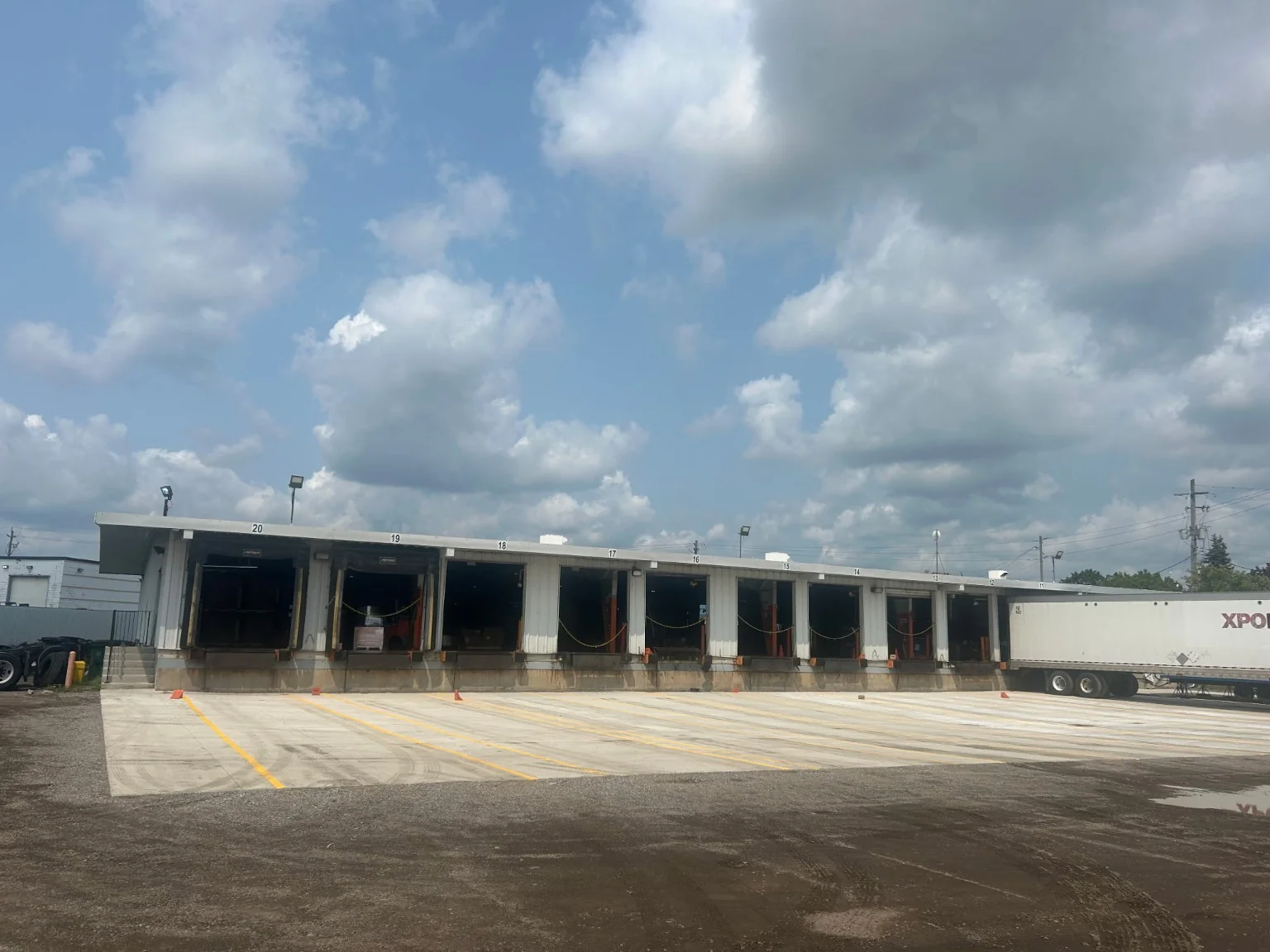
Heavy-duty loading aprons and concrete truck-court surfaces for commercial warehouses, logistics hubs and industrial properties around London, Ontario.
PRECISION
WHERE IT
COUNTS.
The surface in front of a loading dock does more than provide access. It must be designed around concentrated loading from trailer landing gear, heavy truck tires and repeated forklift traffic, along with the demands of receiving and shipping operations.
London Commercial Concrete focuses on commercial-site applications. Final specifications—including slab thickness, reinforcement, concrete mix and joint design—depend on the job requirements and any applicable engineered plans.
THOUGHT THROUGH.
BEFORE THE POUR.
Requirements and site conditions drive the planning process.
Dock approach
Consider vehicle travel paths, stopping areas, reversing and turning activity around each bay.
Site transitions
Coordinate transitions between adjacent asphalt, existing concrete, dock thresholds and surrounding grades.
Reinforcement & construction
Work from project specifications and drawings for appropriate reinforcement, joints and installation requirements.
BUILT FOR
THE SITE.
- New construction around shipping and receiving bays
- Replacement of failed or damaged commercial aprons
- Concrete access surfaces within truck circulation zones
- Tie-ins to existing industrial paving
START WITH
THE BASICS.
- What is the location and number of loading bays?
- Are you planning new construction, replacement or a site expansion?
- What vehicle types and expected traffic will use the area?
- Do you have drawings, dimensions or a target construction window?